
Can Bitcoin’s Growth Indicate a New Era After Crypto’s ‘Winter’?
Bitcoin's recovery signals the end of crypto winter. Institutional adoption, embedded finance, and regulatory clarity are reshaping the digital asset landscape toward stability and sustainable growth.

TL;DR
Bitcoin's 2023 recovery signals a likely shift past crypto winter, though not a guaranteed one. After the market cap fell 62% to about $835 billion in 2022, Bitcoin surged 130% from January and crossed $40,000, a 20-month high. Institutional adoption, tokenization, permissioned DeFi, and demand for regulatory clarity now anchor the path toward sustainable growth.
Introduction
2022, labeled as the 'crypto winter', marked a significant downturn for the cryptocurrency market. The total market capitalization plunged by 62%, dropping from $2.2 trillion to around $835 billion[1]. This decline starkly contrasts with the previous crypto winter, as institutional crypto adoption remained firmly entrenched despite the setbacks. Unlike earlier downturns where digital assets underperformed most traditional risk assets, the Sharpe ratio performance of cryptocurrencies in 2022 was in line with US and global stock indices, and even outperformed US bonds. Looking ahead, the crypto ecosystem's evolution emphasizes areas like tokenization, permissioned DeFi, and Web3, maintaining the core investment thesis for leading cryptocurrencies like Bitcoin and Ethereum. However, the industry faces a challenging road to recovery, marked by a confidence crunch due to insolvencies and deleveraging events like FTX's bankruptcy. These challenges have necessitated a greater call for regulatory clarity and risk controls, potentially extending the market downcycle. Despite these hurdles, this period may also pave the way for innovations and a shift in digital asset selection towards higher quality names, possibly opening up key value opportunities.
Bitcoin Price Growth Amidst Market Recovery
In the final stretch of 2023, Bitcoin showcases a robust recovery, underlining its role as a market stabilizer. The year has been remarkable for Bitcoin, with its value surging by 130% since January, hinting at a strong comeback post the crypto winter. The upward trend, particularly notable in December—a historically bullish period for Bitcoin—echoes past trends of significant year-end gains[4].
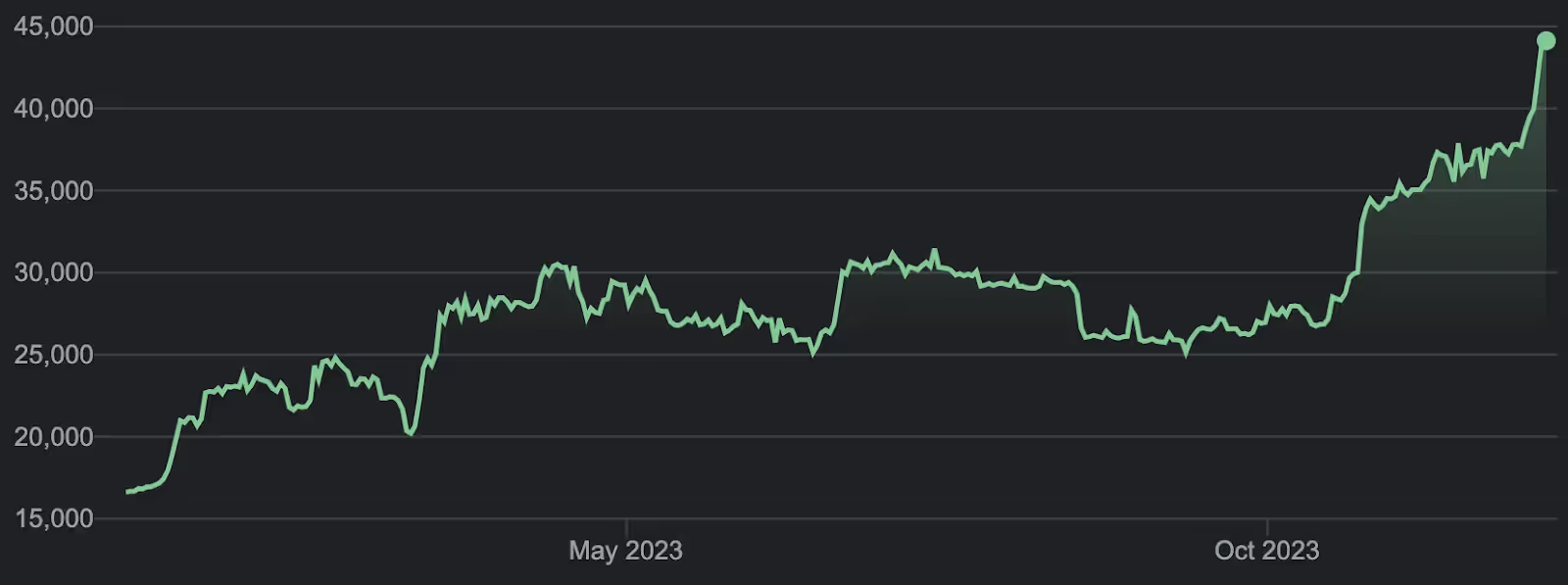
BTC_USD YTD
Recently, Bitcoin crossed the $40,000 mark, even briefly exceeding $42,000, marking a 20-month high. This surge, driven by factors like anticipated U.S. interest rate cuts and positive market sentiment, underscores Bitcoin's resilience.
Bitcoin's recovery, characterized by its decentralized nature and status as 'digital gold', not only boosts investor confidence but also influences the overall market sentiment, playing a key role in the broader crypto market's path to stability and growth.
Frequently asked questions
How much did the crypto market decline during the 2022 crypto winter?
During the 2022 crypto winter, total market capitalization plunged 62%, dropping from $2.2 trillion to around $835 billion. Unlike earlier downturns, institutional adoption remained entrenched, and crypto's Sharpe ratio performance stayed in line with US and global stock indices, even outperforming US bonds.
How strong was Bitcoin's recovery heading into the end of 2023?
Bitcoin surged 130% from January 2023 and crossed the $40,000 mark, briefly exceeding $42,000 to hit a 20-month high. The rally was driven by anticipated U.S. interest rate cuts and positive market sentiment, with December historically being a bullish period for Bitcoin.
What factors suggest crypto is entering a more sustainable era rather than another speculative cycle?
The ecosystem's evolution emphasizes tokenization, permissioned DeFi, and Web3, while institutional adoption stayed firmly in place through the downturn. A confidence crunch from insolvencies like FTX's bankruptcy has pushed greater demand for regulatory clarity and risk controls, and a shift toward higher quality digital assets points to a more durable foundation.
Get posts like this in your inbox